The Complete SEO Rescue Guide: 41 Critical Fixes for Ranking Drops & Traffic Loss
A comprehensive guide for website owners facing visibility challenges

Introduction
You’ve invested time and resources into your website, yet search traffic remains elusive. When asking why is my website not ranking, the answer rarely lies in a single issue. Multiple factors typically combine to create underperformance. This guide addresses 41 distinct SEO problems with actionable solutions. For comprehensive support, explore professional seo services tailored to your specific needs.
Part One: Diagnostic Foundations
How to Perform an SEO Audit
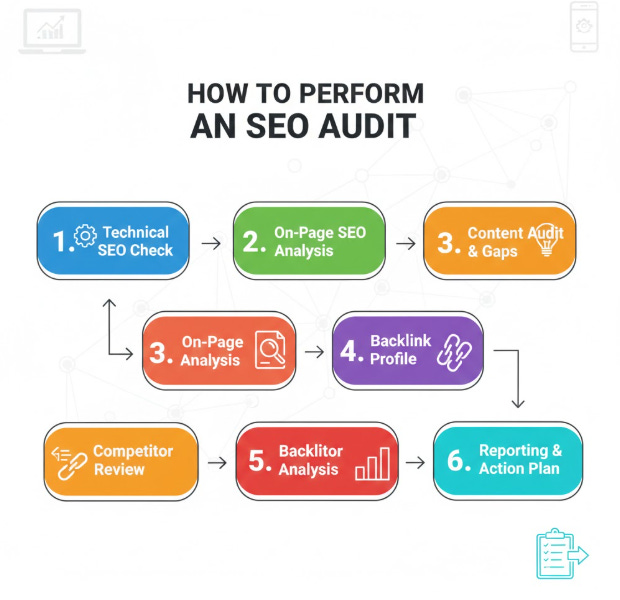
Every effective strategy begins with understanding your current state. Learning how to perform an SEO audit requires systematic examination across four dimensions: technical infrastructure, on-page elements, content quality, and off-page authority.
Start by crawling your entire website. Identify errors requiring immediate attention. Document redirect chains exceeding three hops. Catalog pages missing critical elements. Use SGR WEBCHECK for unified diagnostics.
Compare crawled URLs against Google Search Console indexed count. Identify orphaned pages receiving no internal links. Review robots.txt for accidental blocking. Run Core Web Vitals reports. Document performance bottlenecks.
Finally, compare your metrics against top-ranking competitors. Identify gaps in schema implementation. Review backlink quality. Score issues by impact versus difficulty. Create a 90-day remediation roadmap.
Why Your Website Isn’t Ranking
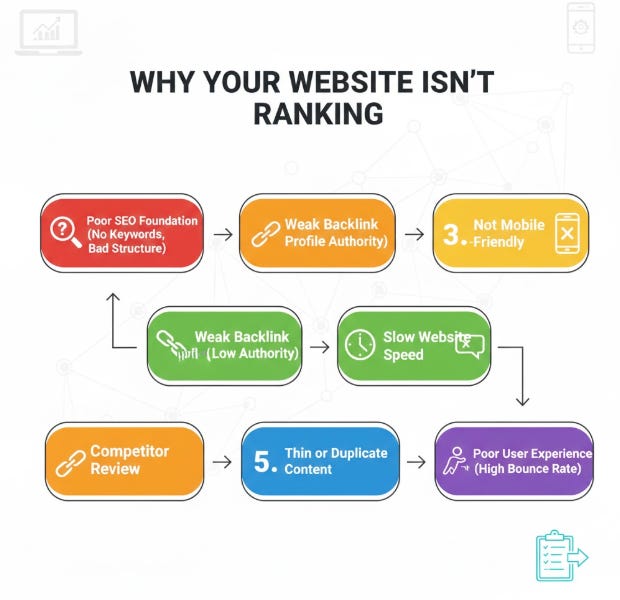
When confronting why is my website not ranking, systematically eliminate potential causes. Run site:yourdomain.com in Google search. Compare returned count against your total published pages. If discrepancy exceeds 20%, investigate crawl barriers.
Identify 20 target keywords essential to your business. Check current rankings. If ranking beyond position 50, investigate relevance signals. If ranking positions 20-50, focus on authority building. If ranking positions 5-20, optimize click-through rate elements.
Review top-ranking pages for your keywords. Compare your content depth against competitors. Identify missing subtopics competitors cover. Assess content freshness.
Part Two: Technical Infrastructure
Fix Slow Website Loading Speed
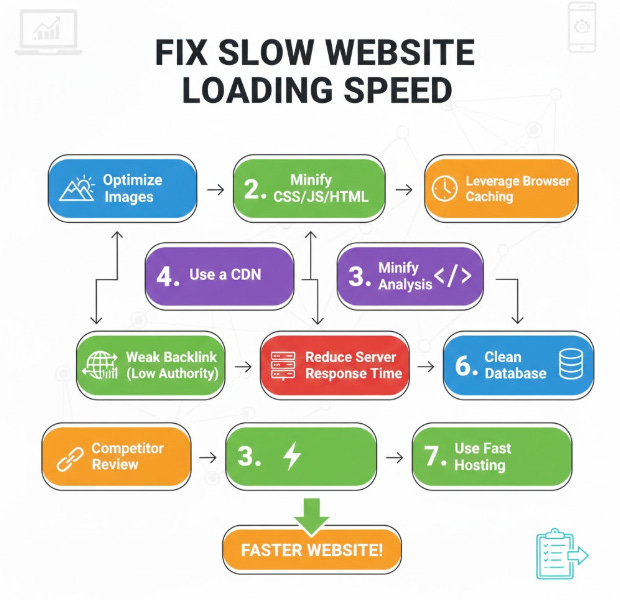
Mastering how to fix slow website loading speed requires understanding the complete request-response lifecycle. Shared hosting environments create performance volatility. Migrate to virtual private servers when traffic exceeds 10,000 monthly visitors.
Implement page caching at multiple levels. Server-level caching with Varnish dramatically reduces load times. Set appropriate cache-control headers. Images should cache for 30-60 days, CSS and JavaScript for 7-30 days.
Modern image formats outperform legacy options. WebP provides 25-35% smaller files than JPEG. AVIF offers additional 20% reduction. Implement responsive images serving appropriately sized versions based on viewport dimensions.
Render-blocking JavaScript delays content display. Defer non-critical scripts and inline critical JavaScript. Critical CSS inlining renders above-the-fold content immediately.
How to Reduce Page Load Time
Beyond basic speed fixes, learning how to reduce page load time requires advanced techniques. Identify resources required for initial viewport rendering. Prioritize these through preload hints.
Modern protocols multiplex requests, eliminating head-of-line blocking. Content Delivery Networks distribute assets across global edge locations. Users receive resources from geographically proximate servers.
Brotli compression achieves 20-30% better ratios than Gzip. Implement at server level with appropriate quality settings.
Improve Core Web Vitals
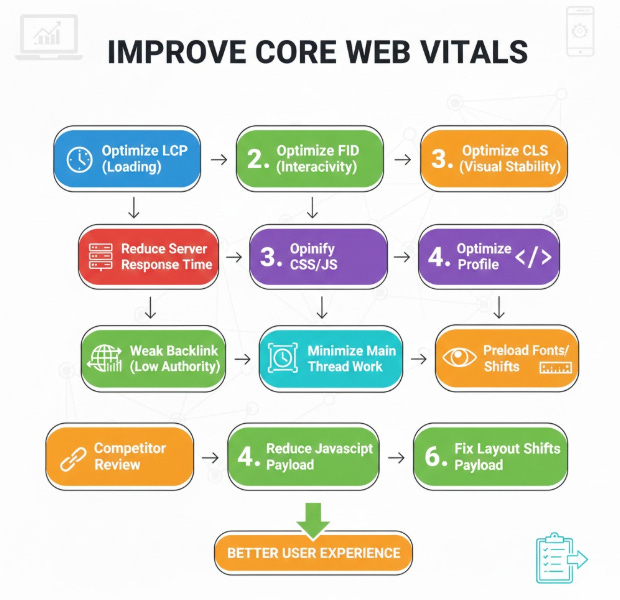
Google’s experience metrics directly impact rankings. Understanding how to improve core web vitals requires technical depth across three measurements. Largest Contentful Paint requires identifying which element triggers LCP. Preload LCP images with fetchpriority=high.
Interaction to Next Paint optimization focuses on JavaScript execution efficiency. Long tasks block user interaction. Break monolithic JavaScript into smaller chunks.
Cumulative Layout Shift elimination requires dimension attributes on images. Browsers reserve space before resources load, preventing content jumps.
Fix Mobile-First Indexing Errors
Google primarily uses mobile content for ranking. Mobile first indexing errors occur when mobile versions lack content present on desktop. Every significant desktop element must exist on mobile.
Schema markup must match across versions. Mobile pages missing structured data lose rich result eligibility. Proper viewport meta tags ensure correct scaling. Text below 16px triggers mobile usability warnings.
JavaScript SEO Best Practices
Modern frameworks require specialized knowledge. Javascript seo best practices ensure search engines access rendered content. Server-side rendering pre-renders pages, sending complete HTML to bots.
Static site generation produces HTML files for every possible route. Fastest delivery with minimal server overhead. Client-side rendering requires careful implementation ensuring critical content renders without JavaScript.
Optimize Robots.txt File
Search bots require clear instructions. Learning to optimize robots txt file balances accessibility with crawl budget conservation. Modern rendering requires style and script access. Blocking these resources prevents Google from seeing rendered pages.
Fix Crawl Errors in Google Search Console
Search Console alerts require immediate attention. Learning to fix crawl errors in Google Search Console prevents ranking deterioration. Site errors include DNS resolution failures and server connection timeouts.
URL errors include 404 not found and 500 internal server errors. Legitimate missing content requires 301 redirects to relevant alternatives. Custom 404 pages with navigation options retain users.
Part Three: Indexation and Visibility
Pages Not Getting Indexed
When quality content remains invisible, understanding why my web pages not getting indexed becomes critical. Large sites with 10,000+ pages may exceed crawl budgets. Prioritize important pages through XML sitemap organization.
Google may suppress low-quality content under 300 words. Duplicate or auto-generated content faces filters. Verify against noindex tags accidentally applied and robots.txt disallow directives.
Website Not Showing Up on Google
When your domain disappears from results, investigating website not showing up on google search requires urgent action. Run site:yourdomain.com. Zero results indicates manual action or robots.txt blocking.
Google warns users about compromised sites. Malware infections trigger warnings. Hacked content causes removal. If Search Console shows manual actions, read violation details carefully and remediate identified issues.
SSL Certificate Errors SEO
Security certificates affect both trust and rankings. Understanding ssl certificate errors seo prevents visitor loss. Expired certificates trigger browser warnings. Set renewal reminders 30 days before expiration.
HTTPS pages loading HTTP resources trigger partial security warnings. Identify and update all resource URLs to HTTPS. Redirect all HTTP traffic to HTTPS permanently.
Website Traffic Dropped Suddenly
When analytics show sharp drops, analyzing website traffic dropped suddenly requires forensic investigation. Compare decline dates against known Google updates. Core updates occur typically in March, August, and December.
Recent redesigns without proper redirects often cause drops. Extended downtime or slow responses trigger crawl budget reduction. If recent changes caused decline, restore previous versions where possible.
Part Four: On-Page Optimization
Fix Missing Meta Descriptions
Descriptions influence click-through rates significantly. Learning how to fix missing meta descriptions improves SERP performance. Desktop displays 158-160 characters. Mobile shows approximately 120 characters. Place critical information in first 100 characters.
Effective descriptions include primary keyword naturally, value proposition, and call to action. WordPress plugins auto-generate missing descriptions through Yoast SEO or Rank Math.
Meta Tag Analyzer
Regular auditing prevents metadata erosion. Using a meta tag analyzer identifies optimization opportunities. Title tags should be 50-60 characters with keyword placement front-loaded.
Meta descriptions require length compliance and keyword presence. Duplicate detection prevents content confusion. Robots meta tags control index and follow directives.
Fix Duplicate Content Issues
Content duplication dilutes ranking authority. Learning to fix duplicate content issues preserves link equity. Internal duplication includes WWW vs non-WWW versions and trailing slash variations.
Canonical tag implementation points to preferred URLs. 301 redirects permanently send duplicate versions to canonical URLs. Configure Google Search Console to specify parameter effects on content.
Fix Canonical Tag Issues
Improper canonicals create confusion. Learning to fix canonical tag issues ensures proper signal consolidation. Every page should canonically reference itself when no duplicate exists.
Page A → Page B → Page C creates equity loss. Direct all canonicals to ultimate destination. Regular crawls identify missing canonical tags and chains exceeding 2 hops.
Fix Thin Content
Low-value pages harm site authority. Learning to fix thin content improves quality signals. Blog posts should exceed 1000 words. Category pages need 150+ words descriptive text.
When expansion impractical, check backlinks before removal. 301 redirect to relevant alternatives. Update internal links pointing to removed content.
Content Pruning Strategy
Strategic content removal improves overall site quality. A content pruning strategy maintains healthy site architecture. Pages with zero organic traffic in 12 months and zero backlinks qualify for removal.
Remove obvious low-value pages including thin affiliate content and outdated news posts. Merge related content by identifying topic clusters with 3+ thin pages. Create comprehensive pillars and redirect thin pages.
Keyword Cannibalization Checker
Multiple pages targeting identical terms create internal competition. Using a keyword cannibalization checker identifies conflicts. Review Search Console queries identifying keywords with multiple ranking pages.
For truly overlapping content, identify strongest performing page. Merge other content into primary and 301 redirect secondary URLs. When pages serve different intents, refine target keywords and adjust content focus.
Part Five: Authority Building
Increase Domain Authority
Authority determines ranking ceiling. Learning to increase domain authority requires systematic effort. Create linkable assets including original research and comprehensive guides.
Pass authority to important pages through strategic internal linking. Link from high-authority pages using descriptive anchor text. Create topic clusters with clear organizational hierarchy.
Why Are My Images Not Ranking
Visual content drives significant traffic. Understanding why are my images not ranking in google improves visibility. Descriptive names beat generic identifiers. “handmade-leather-wallet-brown.jpg” outperforms “IMG_5827.jpg.”
Alt text describes image content accurately with keywords naturally included. Surrounding content matters through relevant page topics and descriptive captions.
Fix Internal Linking Structure
Navigation architecture distributes authority. Learning to fix internal linking structure improves crawlability. Pages without internal links require links from relevant content.
Analyze link text patterns avoiding over-optimized exact match and generic “click here” usage. Pages beyond 3 clicks from homepage need navigation improvement.
Why Is Google Not Reading Schema Markup
Structured data enables rich results. Diagnosing why is google not reading schema markup requires systematic testing. Google’s testing tool identifies missing required properties and invalid value types.
JSON-LD preferred over microdata. Each schema type requires specific fields. Product needs name, image, offers. Recipe requires name, image, ingredients, instructions.
How to Fix Redirect Chains
Multiple redirects slow page loads and dilute authority. Learning to fix redirect chains improves performance. Crawl tools identify sequences like URL A → URL B → URL C.
Replace chains with single redirects by identifying final destination URL. Create new redirect from source to final. Remove intermediate redirect rules.
Part Six: User Experience Signals
Why Is Bounce Rate High
High exit rates signal experience problems. Analyzing why is bounce rate high reveals user experience gaps. Users leave when content doesn’t match expectations through misleading titles or wrong content format.
Technical problems driving exits include slow loading speeds and mobile responsiveness failures. Ensure meta data accurately reflects content. Improve time-on-page through internal links to related content.
Improve Organic CTR
Click-through rates determine traffic volume regardless of rankings. Learning to improve organic ctr maximizes existing rankings. Incorporate emotional triggers like “Ultimate” and “Proven.” Use numbers attracting attention through “7 Ways to...”
Value proposition articulation clearly communicates user gains. “Learn how to fix X in 5 minutes” outperforms vague descriptions.
Optimize Featured Snippets
Position zero captures maximum visibility. Learning to optimize featured snippets requires understanding snippet formats. Paragraph snippets work for definition-style queries with direct answers in 40-50 words.
List snippets suit step-by-step content with numbered or bulleted lists. Format content answering specific questions with direct answers following headings.
Part Seven: Common Errors
How to Find and Fix Broken Links
Dead links harm user experience and crawl efficiency. Learning how to find and fix broken links maintains site health. Regular automated scans identify internal broken links and external outbound links.
For links pointing to moved content, identify correct destination URL and update link href attribute. For external links to other sites, search for moved content through archive.org.
How to Fix 404 Errors
Proper 404 handling preserves user experience. Learning how to fix 404 errors requires strategic response planning. Content intentionally removed needs 301 redirects to relevant alternatives.
Effective 404 pages include site logo linking to homepage, search functionality, and popular content links. Category navigation and contact information retain users.
How to Recover from Google Penalty
Algorithmic or manual actions require structured response. Learning how to recover from google penalty demands systematic remediation. Search Console notifications indicate manual actions for unnatural links or thin content.
For link-based penalties, compile all backlinks and identify toxic links. Contact webmasters for removal and disavow remaining toxic links. Submit reconsideration request with documentation.
Part Eight: Local SEO
Local Business Not Showing in Google Maps
Local businesses need map pack presence. When local business not showing in Google Maps, systematic verification identifies causes. Unverified profiles limit visibility. Complete verification through postcard or phone.
Required fields include business name consistent with signage, physical address, and local phone number. Business hours must include holidays. Categories need primary and secondary selection.
Name, Address, Phone must match across website footer, citation directories, and social media profiles.
Part Nine: Professional Resources
Professional SEO Services
Complex problems require expert intervention. Professional seo services provide specialized expertise when internal resources reach limits. Technical SEO audits include comprehensive infrastructure analysis and performance optimization recommendations.
Content strategy development includes topic cluster architecture and keyword gap analysis. Link building campaigns use white-hat authority acquisition through digital PR.
SEO Audit Services
Regular audits prevent ranking deterioration. Seo audit services provide systematic health checks. Technical infrastructure assessment evaluates site speed and mobile compatibility.
On-page optimization review examines meta data completeness and header structure analysis. Off-page authority analysis includes backlink profile audit and toxic link identification.
Digital Marketing
SEO doesn’t exist in isolation. Digital marketing encompasses complementary channels amplifying search visibility. SEO-driven content strategy uses keyword-informed topics distributed across channels.
Social media provides amplification and engagement. Email marketing develops audiences through newsletter content. Paid advertising offers complementary visibility.
Website Development
Development decisions impact rankings permanently. Website development requires SEO integration from inception. Choose SEO-friendly platforms like WordPress with proper configuration.
Plan permanent URL architecture with descriptive paths and keyword inclusion. Establish performance budgets with maximum page size and JavaScript limits.
Part Ten: Tools
Free PDF Converter
Document optimization expands content reach. A free pdf converter transforms static documents into web-friendly formats. PDF to HTML creates web-accessible content preserving formatting.
PDF to Text extracts content for blog post creation and social media snippets. PDF optimization includes compression for faster downloads.
Meta Tag Analyzer
Regular metadata auditing prevents optimization decay. Using a meta tag analyzer provides actionable insights. Bulk URL processing analyzes multiple pages simultaneously.
Issue identification includes missing meta descriptions and duplicate title tags. Recommendation generation provides specific improvement suggestions.
Keyword Cannibalization Checker
Internal competition identification requires specialized tools. A keyword cannibalization checker prevents self-competition. Import Google Search Console data identifying queries with multiple ranking pages.
Resolution recommendations include merge candidate identification and redirect mapping suggestions. Internal link update planning preserves authority.
SGR WEBCHECK
Comprehensive site analysis requires integrated tools. SGR WEBCHECK provides unified diagnostics. Technical health scan assesses server response time and SSL certificate validation.
On-page optimization check verifies title tag presence and meta description completion. Performance analysis measures Core Web Vitals and page size calculation.
Part Eleven: Recovery
Website Redesign SEO
Site overhauls risk rankings destruction. Understanding website redesign seo prevents migration disasters. Create URL mapping documenting current URLs and destinations. Maintain URLs where possible.
Test staging environment completely before launch. Verify all redirects function and check meta data migration. Validate schema implementation and measure performance metrics.
How to Remove Toxic Backlinks
Bad links trigger penalties. Learning to remove toxic backlinks protects site integrity. Red flags include links from porn or gambling sites and sites in irrelevant languages.
Use specialized tools like Ahrefs toxic score and SEMrush toxicity metric. Contact webmasters professionally with polite removal requests. Document all communications and follow up after 2 weeks.
Why Is My Quality Content Not Ranking
When excellent content underperforms, investigating why is my quality content not ranking reveals technical barriers. Check indexation status through site search. Verify no accidental noindex tags.
Review internal linking pointing to the content. Ensure sufficient authority passes to the page. Compare against competitors for missing elements they include.
Fix Redirect Chains
Earlier covered in Part Five, revisit how to fix redirect chains as part of recovery. Each redirect adds latency and equity loss. Maintain clean redirect structures.
Improve Organic CTR
Earlier covered in Part Six, how to improve organic ctr remains essential for recovery. Compelling titles and descriptions drive clicks even at lower positions.
JavaScript SEO Best Practices
Earlier covered in Part Two, javascript seo best practices ensure modern sites remain accessible during recovery periods.
Optimize Robots.txt File
Earlier covered in Part Two, revisit optimize robots txt file to ensure no accidental blocks during recovery.
Content Pruning Strategy
Earlier covered in Part Four, content pruning strategy removes low-quality pages dragging down overall site authority during recovery.
Optimize Featured Snippets
Earlier covered in Part Six, optimize featured snippets captures additional visibility during recovery periods.
How to Build Topical Authority SEO
Comprehensive topic coverage signals expertise. Learning how to build a topical authority seo requires strategic content architecture. Develop comprehensive pillar pages covering broad topics with 5000+ words.
Create deep dives on subtopics with 1500-3000 words each. Link cluster content back to pillar pages. Map content against user journey through awareness, consideration, and decision stages.
Conclusion
Search engine optimization encompasses dozens of interconnected disciplines. Success requires systematic attention to technical infrastructure, content quality, user experience, and authority building. The 41 issues covered represent the most common barriers to search visibility.
Immediate Action Items:
Crawl errors preventing indexation
Security certificate problems
Mobile usability failures
Critical site speed issues
Short-Term Improvements:
Missing meta descriptions
Duplicate content
Broken internal links
Thin content pages
Long-Term Strategy:
Topical authority development
Quality link acquisition
User experience enhancement
Brand signal strengthening
When internal resources reach limits, professional seo services provide specialized expertise. Comprehensive SEO audit services identify hidden issues. Integrated digital marketing amplifies search visibility through complementary channels.
Start with a comprehensive audit using SGR WEBCHECK. Prioritize based on impact potential. Implement systematically. Monitor results continuously. Adjust strategy based on performance data.